

Today, around 21,000 children died around the world. This daily tragedy, from poverty and other preventable causes, rarely makes headline news.
Latest world news
World
France’s New Protest Generation Rises
- Inter Press Service

LONDON, October 26 (IPS) - Classrooms with mouldy walls, riddled with cockroaches and rats, stifling in summer and freezing in winter: this is how French high school students describe the places where they’re meant to learn. These impossible-to-ignore symbols of underfunding and neglect sparked a protest movement that has shaken the country.
How Conflict Brings Biodiversity to the Brink
- Inter Press Service

YEREVAN and SHIKAHOGH STATE RESERVE, Armenia, October 26 (IPS) - Less than 100 metres from military positions facing each other across the Armenia-Azerbaijan border, the forest suddenly disappears.
Upholding Human Rights & Public Safety: How Far Is Bangladesh?
- Inter Press Service

DHAKA, Bangladesh, October 26 (IPS) - Bangladesh has achieved remarkable economic progress over the past few decades. Its garment industry has become globally important, millions of people have entered the workforce, and private businesses have expanded across manufacturing, services, technology and trade. But economic growth alone does not create a healthy business environment. Businesses also need predictable laws, safe workplaces, fair competition, protection of property and contracts, and respect for the rights of workers, consumers and communities.
In Egypt, Guterres warns against Iran-US escalation
- UN News
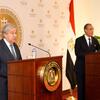
UN Secretary-General António Guterres called for dialogue and diplomacy to end the war between Iran and the United States in remarks on Monday to journalists in Cairo, Egypt.
Security Council LIVE: Children and war, ‘each one is a life’
- UN News
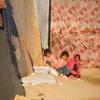
With violations against children caught in armed conflict reaching an unprecedented level this year, the Security Council is marking 30 years since it took on the mandate to protect young people caught up in war.
Ebola: UN officials condemn killing of nurse in DR Congo
- UN News
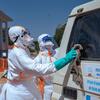
The UN’s Ebola coordinator and the head of the World Health Organization (WHO) have deplored the killing of a nurse working to halt the spread of the disease in the Democratic Republic of the Congo (DRC).
Why do planes keep circling before landing? The UN has a plan to fix it
- UN News
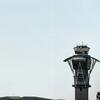
Air traffic delays cost billions and turn journeys into ordeals. Some countries are already proving that better coordination saves thousands of flying hours and cuts emissions – and the UN’s aviation agency wants the rest of the world to follow.
Women ‘first to suffer’ under siege, first to step up as frontline responders in Sudan
- UN News
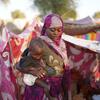
When Tahani Al-Numeiri heard the first explosions in Khartoum, her hometown, war seemed so remote that she assumed they were celebrations from a nearby wedding. It was the morning of 15 April 2023, and the paramilitary Rapid Support Forces had just turned their guns on the army.
Peace Needs Children’s Voices
- Inter Press Service

TOKYO, Japan, October 23 (IPS) - WE THE PEOPLES OF THE UNITED NATIONS DETERMINED to save succeeding generations from the scourge of war, which twice in our lifetime has brought untold sorrow to mankind. The United Nations was established with this commitment.
UN marks 81 years of global cooperation
- UN News
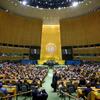
The United Nations celebrates its 81st anniversary on Saturday, highlighting more than eight decades of work to advance peace, human rights and development around the world.
- More stories…
Climate
France’s New Protest Generation Rises
- Inter Press Service
LONDON, October 26 (IPS) - Classrooms with mouldy walls, riddled with cockroaches and rats, stifling in summer and freezing in winter: this is how French high school students describe the places where they’re meant to learn. These impossible-to-ignore symbols of underfunding and neglect sparked a protest movement that has shaken the country.
How Conflict Brings Biodiversity to the Brink
- Inter Press Service
YEREVAN and SHIKAHOGH STATE RESERVE, Armenia, October 26 (IPS) - Less than 100 metres from military positions facing each other across the Armenia-Azerbaijan border, the forest suddenly disappears.
Why do planes keep circling before landing? The UN has a plan to fix it
- UN News
Air traffic delays cost billions and turn journeys into ordeals. Some countries are already proving that better coordination saves thousands of flying hours and cuts emissions – and the UN’s aviation agency wants the rest of the world to follow.
Soil mapping aims to boost agricultural production in Kenya
- UN News
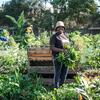
A new Kenyan initiative is helping farmers better understand their soils in a bid to improve crop yields amid intensifying climate shocks.
The Eradication of Extreme Poverty by 2030: a Key UN goal will be a Missed Target
- Inter Press Service
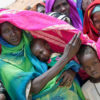
UNITED NATIONS, October 23 (IPS) - The international day for the eradication of poverty, commemorated last week, was a grim reminder that the UN will not achieve its highly-ambitious target of helping eradicate extreme poverty—“in all its forms”– by 2030.
International Day of Climate Action 2026
- Inter Press Service
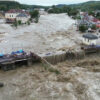
The world is getting hotter. And the consequences are already being felt. From devastating floods and prolonged droughts to intensifying heatwaves, climate change is disrupting lives and livelihoods across the globe.
Bangladesh’s Hidden Climate Bill: How Much Are We Losing Without Counting It?
- Inter Press Service
DHAKA, Bangladesh, October 22 (IPS) - Bangladesh has earned global recognition for reducing deaths from cyclones and floods. Early warning systems, cyclone shelters, embankments and community preparedness have transformed the country’s disaster response. Yet another climate crisis is receiving far less attention: the economic damage climate change is quietly inflicting on households, farmers, workers, businesses and public finances.
Nepal’s deadly glacier flood a ‘defining moment’ for the international community
- UN News
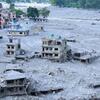
The deadly flash flood that tore through Nepal in August is a “defining moment” for both the country and the international community, according to the head of the UN field agency which builds roads, schools and clinics in crisis zones.
What a Seawater Sample Can Tell Scientists About Ocean Health
- Inter Press Service
DAR ES SALAAM, Tanzania, October 22 (IPS) - A fishing boat’s catch tells only part of the story of the waters around World Heritage sites. Species that escape the net, shelter inside reefs or pass through deeper channels can go unrecorded, leaving communities and conservation officials with an incomplete picture of the marine life supporting coastal livelihoods.
The Sámi People and Reindeer Herding – a Struggle for Sápmi’s Whole Nature
- Inter Press Service

SÁPMI, Norway, October 21 (IPS) - The Sámi, Europe’s last recognised Indigenous community, have faced threats to their existence throughout history. Norway last year has apologised for its forced assimilation policy following the findings of a Truth and Reconciliation Commission report, and in September 2026 Sweden has recently been told to do the same.
- More stories…
Health
Ebola: UN officials condemn killing of nurse in DR Congo
- UN News
The UN’s Ebola coordinator and the head of the World Health Organization (WHO) have deplored the killing of a nurse working to halt the spread of the disease in the Democratic Republic of the Congo (DRC).
Peace Needs Children’s Voices
- Inter Press Service
TOKYO, Japan, October 23 (IPS) - WE THE PEOPLES OF THE UNITED NATIONS DETERMINED to save succeeding generations from the scourge of war, which twice in our lifetime has brought untold sorrow to mankind. The United Nations was established with this commitment.
Blood brothers: WHO chief joins ENHYPEN to celebrate drive success
- UN News

The head of the World Health Organization (WHO) is a self-confessed fan of K-pop sensation ENHYPEN and this week, he got the chance to tell them so in person.
‘Burden and loss’ builds in DR Congo, as Kenya strengthens Ebola containment
- UN News
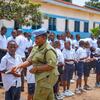
As Ebola continues to spread in the Democratic Republic of the Congo (DRC), more resources are needed to fight the disease and feed patients and families, UN agencies said on Friday.
The Eradication of Extreme Poverty by 2030: a Key UN goal will be a Missed Target
- Inter Press Service
UNITED NATIONS, October 23 (IPS) - The international day for the eradication of poverty, commemorated last week, was a grim reminder that the UN will not achieve its highly-ambitious target of helping eradicate extreme poverty—“in all its forms”– by 2030.
International Day of Climate Action 2026
- Inter Press Service
The world is getting hotter. And the consequences are already being felt. From devastating floods and prolonged droughts to intensifying heatwaves, climate change is disrupting lives and livelihoods across the globe.
Bangladesh’s Hidden Climate Bill: How Much Are We Losing Without Counting It?
- Inter Press Service
DHAKA, Bangladesh, October 22 (IPS) - Bangladesh has earned global recognition for reducing deaths from cyclones and floods. Early warning systems, cyclone shelters, embankments and community preparedness have transformed the country’s disaster response. Yet another climate crisis is receiving far less attention: the economic damage climate change is quietly inflicting on households, farmers, workers, businesses and public finances.
First human case of Shamonda virus reported in France as patient dies
- UN News

A patient in France has died after being infected with Shamonda virus, the first recorded human case of the disease.
DR Congo: Ebola responders under pressure as outbreak expands
- UN News
As the deadly Ebola disease outbreak reached an eighth province of the Democratic Republic of the Congo (DRC), investigators pursued all leads on Thursday to assess the risk of the disease spreading in Nigeria.
As Winter Approaches, Afghanistan Faces Record Hunger and Mounting Human Rights Abuses
- Inter Press Service
UNITED NATIONS, October 21 (IPS) - In recent months, Afghanistan’s humanitarian crisis has severely deteriorated, with the UN reporting record-high levels of acute malnutrition and hunger. Compounded by rampant human rights violations, limited access to basic services, and persistent barriers to humanitarian aid, the UN warns that conditions could considerably worsen in the coming months.
- More stories…
Economy
France’s New Protest Generation Rises
- Inter Press Service
LONDON, October 26 (IPS) - Classrooms with mouldy walls, riddled with cockroaches and rats, stifling in summer and freezing in winter: this is how French high school students describe the places where they’re meant to learn. These impossible-to-ignore symbols of underfunding and neglect sparked a protest movement that has shaken the country.
Upholding Human Rights & Public Safety: How Far Is Bangladesh?
- Inter Press Service
DHAKA, Bangladesh, October 26 (IPS) - Bangladesh has achieved remarkable economic progress over the past few decades. Its garment industry has become globally important, millions of people have entered the workforce, and private businesses have expanded across manufacturing, services, technology and trade. But economic growth alone does not create a healthy business environment. Businesses also need predictable laws, safe workplaces, fair competition, protection of property and contracts, and respect for the rights of workers, consumers and communities.
Why do planes keep circling before landing? The UN has a plan to fix it
- UN News
Air traffic delays cost billions and turn journeys into ordeals. Some countries are already proving that better coordination saves thousands of flying hours and cuts emissions – and the UN’s aviation agency wants the rest of the world to follow.
Were Half of Venezuela’s Oil Revenues Really Stolen? — Part II
- Inter Press Service
DENVER, Colorado, USA, October 23 (IPS) - So, if Venezuela claims to be importing from the rest of the world roughly as much as it was exporting during those years, and the rest of the world confirms Venezuela’s story, then where could those additional $11 billion that presumably ended up in the bank accounts of Maduro’s cronies be?
The Eradication of Extreme Poverty by 2030: a Key UN goal will be a Missed Target
- Inter Press Service
UNITED NATIONS, October 23 (IPS) - The international day for the eradication of poverty, commemorated last week, was a grim reminder that the UN will not achieve its highly-ambitious target of helping eradicate extreme poverty—“in all its forms”– by 2030.
International Day of Climate Action 2026
- Inter Press Service
The world is getting hotter. And the consequences are already being felt. From devastating floods and prolonged droughts to intensifying heatwaves, climate change is disrupting lives and livelihoods across the globe.
Bangladesh’s Hidden Climate Bill: How Much Are We Losing Without Counting It?
- Inter Press Service
DHAKA, Bangladesh, October 22 (IPS) - Bangladesh has earned global recognition for reducing deaths from cyclones and floods. Early warning systems, cyclone shelters, embankments and community preparedness have transformed the country’s disaster response. Yet another climate crisis is receiving far less attention: the economic damage climate change is quietly inflicting on households, farmers, workers, businesses and public finances.
Were Half of Venezuela’s Oil Revenues Really Stolen? — Part I
- Inter Press Service

DENVER, Colorado, USA, October 21 (IPS) - If you’ve been around Venezuelans for long enough, you know that we tend to speak in superlatives. We have the best baseball players, the most beautiful beaches, the tastiest arepas, and the wickedest dictators. But even being used to the scale of our superlatives didn’t quite prepare me for what I read in the May 5 edition of The New York Times, in a story called “In Venezuela, Trump Vowed to Show Accountability. Oil Deals Linger.”
As Winter Approaches, Afghanistan Faces Record Hunger and Mounting Human Rights Abuses
- Inter Press Service
UNITED NATIONS, October 21 (IPS) - In recent months, Afghanistan’s humanitarian crisis has severely deteriorated, with the UN reporting record-high levels of acute malnutrition and hunger. Compounded by rampant human rights violations, limited access to basic services, and persistent barriers to humanitarian aid, the UN warns that conditions could considerably worsen in the coming months.
From Small Islands to Antalya: COP31 Must Move Climate Promises from Paper to People
- Inter Press Service

VICTORIA, Seychelles, October 21 (IPS) - When you grow up on a small island, the ocean is not scenery. It is your neighbour, your livelihood, and the measure of time itself. For decades, as I walked the beaches of Seychelles, I watched the subtle shifts that scientists were warning the world about. The tide crept a little higher up the sand each year. After a warm season, vibrant coral gardens turned ghost-white. Storms that once belonged to rare memory began arriving with unsettling regularity.
- More stories…
More news topics
Read more news stories by
More news by World, Economy, Environment, Geopolitics, Health, Human Rights, More news topics …
World news by


Issues in depth
Latest
Action on climate change is cheaper than inaction
Many are afraid that tackling climate change is going to be too costly. But increasingly, studies are showing action will not just be cheaper than inaction, but could actually result in economic, environmental and even health benefits, while improving sustainability.
Read “Action on climate change is cheaper than inaction” to learn more.
Climate Change and Global Warming Introduction
 The climate is changing. The earth is warming up, and there is now overwhelming scientific consensus that it is happening, and human-induced. With global warming on the increase and species and their habitats on the decrease, chances for ecosystems to adapt naturally are diminishing.
Many are agreed that climate change may be one of the greatest threats facing the planet. Recent years show increasing temperatures in various regions, and/or increasing extremities in weather patterns.
This section looks at what causes climate change, what the impacts are and where scientific consensus currently is.
Read “Climate Change and Global Warming Introduction” to learn more.
COP20—Lima Climate Conference
 An overview of the Climate Change Conference (also known as COP 20), held in Lima, Peru in December 2014.
While it seemed like it was a successful meeting, because developing nations were committed to drawing up their own plans for emissions reductions for the first time, a number of important issues were left undecided such as how financing would work.
This page is an overview of the Lima Climate conference.
Read “COP20—Lima Climate Conference” to learn more.
Ebola Outbreak in West Africa
An overview of the Ebola virus outbreak in West Africa that has been described by the World Health Organization as the largest, most severe and most complex outbreak in the history of the disease.
The epidemic began at the end of 2013, in Guinea. From there it spread to Liberia, Sierra Leone, Nigeria and Senegal. Many of the affected countries face enormous challenges in stopping its spread and providing care for all patients.
Thousands of people have died and many are at risk as the fatality rate from this virus is very high. As the crisis worsens, as well as the enormous health challenges involved, the social and economic consequences may set these countries back, reversing some gains a number of these countries have made in recent years.
Read “Ebola Outbreak in West Africa” to learn more.
Foreign Aid for Development Assistance
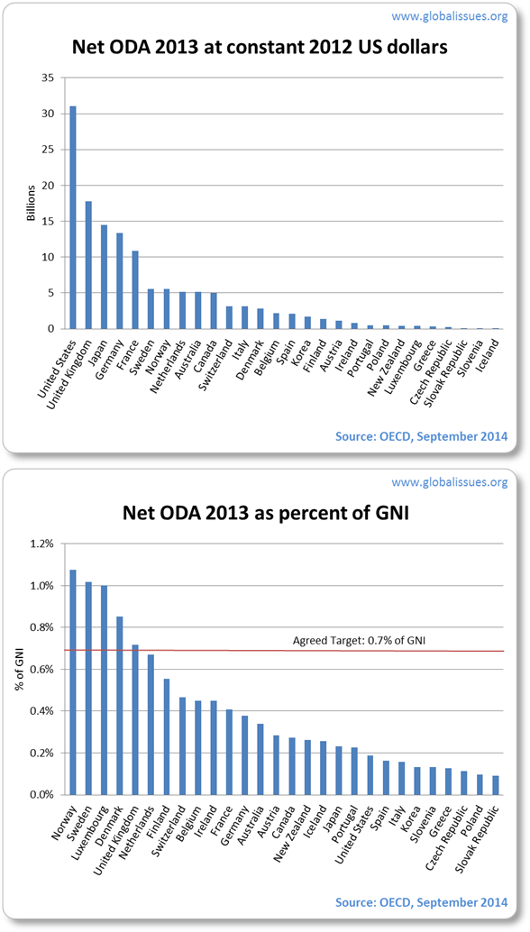
In 1970, the world’s rich countries agreed to give 0.7% of their gross national income as official international development aid, annually.
Since that time, billions have certainly been given each year, but rarely have the rich nations actually met their promised target.
For example, the US is often the largest donor in dollar terms, but ranks amongst the lowest in terms of meeting the stated 0.7% target.
Furthermore, aid has often come with a price of its own for the developing nations. Common criticisms, for many years, of foreign aid, have included the following:
- Aid is often wasted on conditions that the recipient must use overpriced goods and services from donor countries
- Most aid does not actually go to the poorest who would need it the most
- Aid amounts are dwarfed by rich country protectionism that denies market access for poor country products while rich nations use aid as a lever to open poor country markets to their products
- Large projects or massive grand strategies often fail to help the vulnerable; money can often be embezzled away.
This article explores who has benefited most from this aid, the recipients or the donors.
Read “Foreign Aid for Development Assistance” to learn more.
Nature and Animal Conservation
 Preserving species and their habitats is important for ecosystems to self-sustain themselves.
Yet, the pressures to destroy habitat for logging, illegal hunting, and other challenges are making conservation a struggle.
Read “Nature and Animal Conservation” to learn more.
Most Popular
Poverty Facts and Stats
Most of humanity lives on just a few dollars a day. Whether you live in the wealthiest nations in the world or the poorest, you will see high levels of inequality.
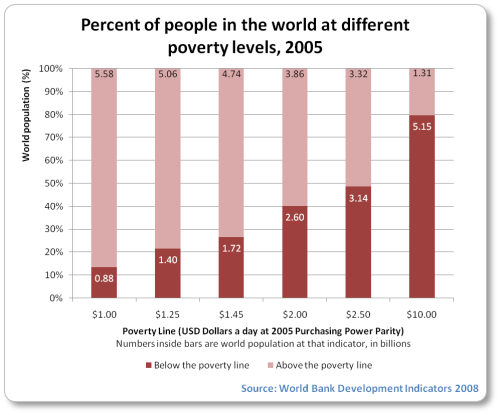
The poorest people will also have less access to health, education and other services. Problems of hunger, malnutrition and disease afflict the poorest in society. The poorest are also typically marginalized from society and have little representation or voice in public and political debates, making it even harder to escape poverty.
By contrast, the wealthier you are, the more likely you are to benefit from economic or political policies. The amount the world spends on military, financial bailouts and other areas that benefit the wealthy, compared to the amount spent to address the daily crisis of poverty and related problems are often staggering.
Some facts and figures on poverty presented in this page are eye-openers, to say the least.
Read “Poverty Facts and Stats” to learn more.
Global Financial Crisis
 Following a period of economic boom, a financial bubble — global in scope — burst, even causing some of the world’s largest financial institutions have collapsed. With the resulting recession, many governments of the wealthiest nations in the world have resorted to extensive bail-out and rescue packages for the remaining large banks and financial institutions while imposing harsh austerity measures on themselves.
Some of the bail-outs have also led to charges of hypocrisy due to the apparent socializing of the costs while privatizing the profits.
Furthermore, the institutions being rescued are typically the ones got the world into this trouble in the first place. For smaller businesses and poorer people, such options for bail out and rescue are rarely available when they find themselves in crisis.
Plummeting stock markets at one point wiped out 33% of the value of companies, $14.5 trillion. Taxpayers bailed out their banks and financial institutions with large amounts of money. US taxpayers alone have spent some $9.7 trillion in bailout packages and plans. The UK and other European countries have also spent some $2 trillion on rescues and bailout packages. More is expected. Much more.
Such numbers, made quickly available, are enough to wipe many individual’s mortgages, or clear out third world debt many times over. Even the high military spending figures are dwarfed by the bailout plans to date.
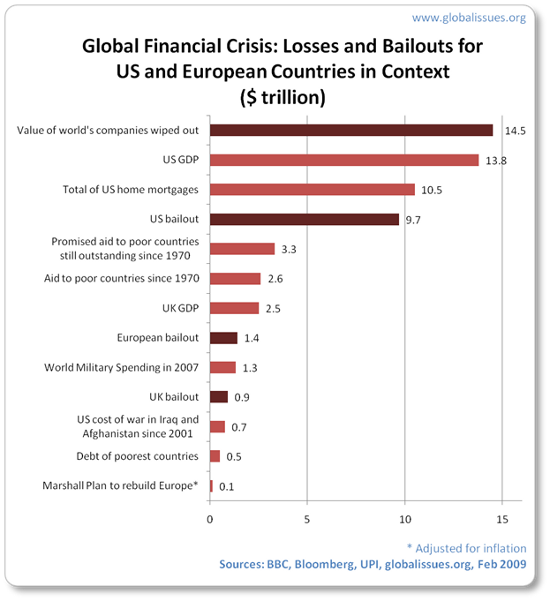
This problem could have been averted (in theory) as people had been pointing to these issues for decades. However, during boom, very few want to hear such pessimism. Does this crisis spell an end to the careless forms of banking and finance and will it herald a better economic age, or are we just doomed to keep forgetting history and repeat these mistakes in the future? Signs are not encouraging as rich nations are resisting meaningful reform…
Read “Global Financial Crisis” to learn more.
Causes of Poverty
Poverty is the state for the majority of the world’s people and nations. Why is this? Is it enough to blame poor people for their own predicament? Have they been lazy, made poor decisions, and been solely responsible for their plight? What about their governments? Have they pursued policies that actually harm successful development? Such causes of poverty and inequality are no doubt real. But deeper and more global causes of poverty are often less discussed.
Read “Causes of Poverty” to learn more.
Climate Change and Global Warming
The climate is changing. The earth is warming up, and there is now overwhelming scientific consensus that it is happening, and human-induced. With global warming on the increase and species and their habitats on the decrease, chances for ecosystems to adapt naturally are diminishing. Many are agreed that climate change may be one of the greatest threats facing the planet. Recent years show increasing temperatures in various regions, and/or increasing extremities in weather patterns.
This section explores some of the effects of climate change. It also attempts to provide insights into what governments, companies, international institutions, and other organizations are attempting to do about this issue, as well as the challenges they face. Some of the major conferences in recent years are also discussed.
Read “Climate Change and Global Warming” to learn more.
Environmental Issues
Environmental issues are also a major global issue. Humans depend on a sustainable and healthy environment, and yet we have damaged the environment in numerous ways. This section introduces other issues including biodiversity, climate change, animal and nature conservation, population, genetically modified food, sustainable development, and more.
Read “Environmental Issues” to learn more.
Racism
 Racism is the belief that characteristics and abilities can be attributed to people simply on the basis of their race and that some racial groups are superior to others. Racism and discrimination have been used as powerful weapons encouraging fear or hatred of others in times of conflict and war, and even during economic downturns. This article explores racism from around the world.
Read “Racism” to learn more.
Topical
Global Financial Crisis
Following a period of economic boom, a financial bubble — global in scope — burst, even causing some of the world’s largest financial institutions have collapsed. With the resulting recession, many governments of the wealthiest nations in the world have resorted to extensive bail-out and rescue packages for the remaining large banks and financial institutions while imposing harsh austerity measures on themselves.
Some of the bail-outs have also led to charges of hypocrisy due to the apparent socializing of the costs while privatizing the profits.
Furthermore, the institutions being rescued are typically the ones got the world into this trouble in the first place. For smaller businesses and poorer people, such options for bail out and rescue are rarely available when they find themselves in crisis.
Plummeting stock markets at one point wiped out 33% of the value of companies, $14.5 trillion. Taxpayers bailed out their banks and financial institutions with large amounts of money. US taxpayers alone have spent some $9.7 trillion in bailout packages and plans. The UK and other European countries have also spent some $2 trillion on rescues and bailout packages. More is expected. Much more.
Such numbers, made quickly available, are enough to wipe many individual’s mortgages, or clear out third world debt many times over. Even the high military spending figures are dwarfed by the bailout plans to date.
This problem could have been averted (in theory) as people had been pointing to these issues for decades. However, during boom, very few want to hear such pessimism. Does this crisis spell an end to the careless forms of banking and finance and will it herald a better economic age, or are we just doomed to keep forgetting history and repeat these mistakes in the future? Signs are not encouraging as rich nations are resisting meaningful reform…
Read “Global Financial Crisis” to learn more.
Climate Change and Global Warming
The climate is changing. The earth is warming up, and there is now overwhelming scientific consensus that it is happening, and human-induced. With global warming on the increase and species and their habitats on the decrease, chances for ecosystems to adapt naturally are diminishing. Many are agreed that climate change may be one of the greatest threats facing the planet. Recent years show increasing temperatures in various regions, and/or increasing extremities in weather patterns.
This section explores some of the effects of climate change. It also attempts to provide insights into what governments, companies, international institutions, and other organizations are attempting to do about this issue, as well as the challenges they face. Some of the major conferences in recent years are also discussed.
Read “Climate Change and Global Warming” to learn more.
Food and Agriculture Issues
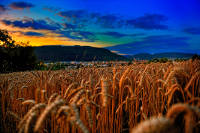 Food and agriculture goes to the heart of our civilizations. Religions, cultures and even modern civilization have food and agriculture at their core. For an issue that goes to the heart of humanity it also has its ugly side.
This issue explores topics ranging from the global food crisis of 2008, to issues of food aid, world hunger, food dumping and wasteful agriculture such as growing tobacco, sugar, beef, and more.
Read “Food and Agriculture Issues” to learn more.
Foreign Aid for Development Assistance
In 1970, the world’s rich countries agreed to give 0.7% of their gross national income as official international development aid, annually.
Since that time, billions have certainly been given each year, but rarely have the rich nations actually met their promised target.
For example, the US is often the largest donor in dollar terms, but ranks amongst the lowest in terms of meeting the stated 0.7% target.
Furthermore, aid has often come with a price of its own for the developing nations. Common criticisms, for many years, of foreign aid, have included the following:
- Aid is often wasted on conditions that the recipient must use overpriced goods and services from donor countries
- Most aid does not actually go to the poorest who would need it the most
- Aid amounts are dwarfed by rich country protectionism that denies market access for poor country products while rich nations use aid as a lever to open poor country markets to their products
- Large projects or massive grand strategies often fail to help the vulnerable; money can often be embezzled away.
This article explores who has benefited most from this aid, the recipients or the donors.
Read “Foreign Aid for Development Assistance” to learn more.
Tax Avoidance and Tax Havens; Undermining Democracy
 Through tax havens, transfer pricing and many other policies — both legal and illegal — billions of dollars of tax are avoided. The much-needed money would helped developing (and developed) countries provide important social services for their populations.
Some tax avoidance, regardless of how morally objectionable it may be to some people, is perfectly legal, and the global super elite are able to hide away trillions of dollars, resulting in massive losses of tax revenues for cash-strapped governments who then burden ordinary citizens further with austerity measures during economic crisis, for example. Yet these super elite are often very influential in politics and business. In effect, they are able to undermine democracy and capitalism at the same time.
As the global financial crisis has affected many countries, tackling tax avoidance would help target those more likely to have contributed to the problem while avoid many unnecessary austerity measures that hit the poorest so hard. But despite rhetoric stating otherwise, it does not seem to high on the agenda of many governments as you might think.
Read “Tax Avoidance and Tax Havens; Undermining Democracy” to learn more.
World Military Spending
World military spending had reduced since the Cold War ended, but a few nations such as the US retain high level spending.
In recent years, global military expenditure has increased again and is now comparable to Cold War levels. Recent data shows global spending at over $1.7 trillion. 2012 saw the first dip in spending — only slightly —since 1998, in an otherwise rising trend.

The highest military spender is the US accounting for almost two-fifths of the world’s spending, more than the rest of the G7 (most economically advanced countries) combined, and more than all its potential enemies, combined.
Read “World Military Spending” to learn more.
“If a man is offered a fact which goes against his instincts, he will scrutinize it closely, and unless the evidence is overwhelming, he will refuse to believe it. If, on the other hand, he is offered something which affords a reason for acting in accordance to his instincts, he will accept it even on the slightest evidence.” — Bertrand Russell, Roads to Freedom